Vietnam: 8 Unforgettable Things To Do in Hanoi

Vietnam’s capital of Hanoi, situated in the north of the country, is a haven for all kinds of travellers renowned for it’s incredible food and culture. While there’s plenty of sightseeing to be done, we’ve made a list of 8 unmissable things to do whilst in Hanoi that will make your trip truly unforgettable. These are easy things to fit into any schedule and will have you leaving the city with memories to last a lifetime.

1. The Note Cafe
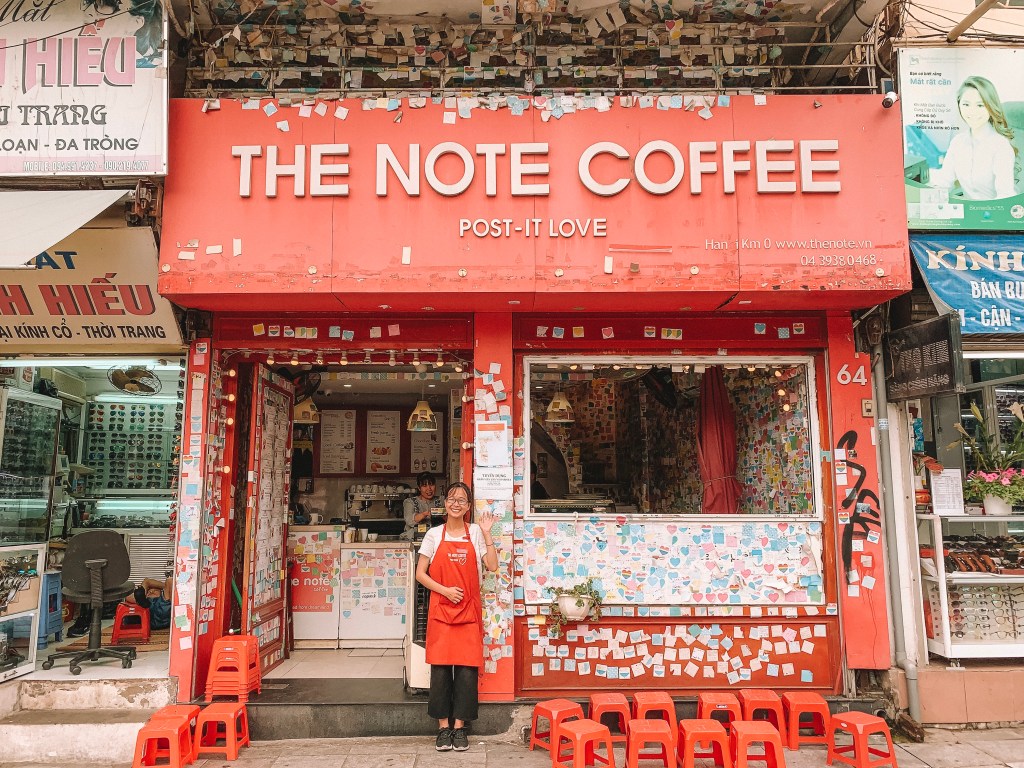
The Note Cafe is a truly unique cafe with staff just as bright and beautiful as the walls covered in notes written by visitors to the cafe. It’s right in the heart of Hanoi’s Old Quarter which makes it a perfect rest stop whilst sightseeing in the surrounding area. You’ll be waved in from afar by one of their smiley members of staff who will give you a warm welcome. Once you order your coffee you’ll be guided upstairs to find a spot to sit, if you’re lucky you can grab a spot by the window so you can people watch with views of the Hoàn Kiếm Lake. Travellers from all over have left notes filling the cafe’s walls from floor to ceiling so even if you’re not a massive coffee fan, it’s still well worth a visit to read the notes written by people all over the world. We visited The Note Cafe twice in our 4 days in Hanoi, the delicious iced lattes helped cool us down in the hot summer heat.

2. Sample truly unique coffee

Vietnam is becoming increasingly popular for their coffees with Vietnamese coffee starting to crop up in cafe’s around London. They have truly unique coffee from the filtering method to the ingredients they mix with it. They have their traditional Vietnamese coffee made with condensed milk and sugar as well as the ‘must try’ egg coffee made with frothed egg yolks, sugar and condensed milk. There’s also plenty of other weird and wonderful kinds of coffee drinks including banana, avocado, coconut and yogurt coffee so sampling some of the local coffee is a must! You’ll find coffee shops on every street and a few of our recommendations include Cong Caphe (many locations around Hanoi with kitsch war memorabilia interiors), The Railway (an excellent spot on Train Street to experience the train passing through the narrow street) and The Note Cafe (as mentioned above, with colourful, handwritten notes covering the interiors). Whilst many of their coffees are not traditionally vegan or lactose-intolerant friendly, many places had dairy free milk (mainly coconut or soy) and adapted drinks.

3. Crossing the roads

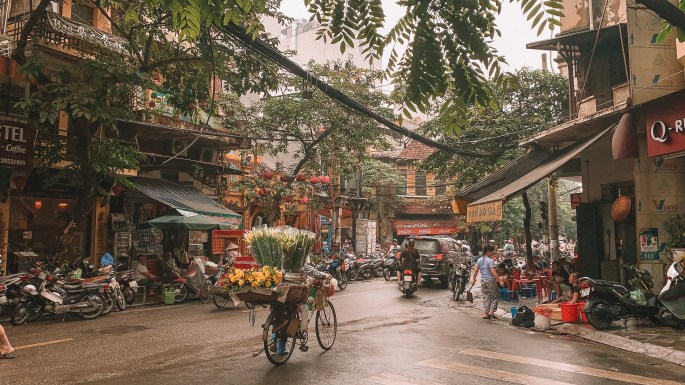
While you may laugh reading this and wonder why on earth crossing the road is a memorable thing, once you arrive in Hanoi you’ll realise why. The never-ending traffic in Hanoi is unlike anywhere we’ve been before with no clear rules or regulations in place. With mopeds and motorbikes carrying anything from TV’s to stacks of ceramic plant pots to a full family of 5 people. Witnessing the traffic levels for yourself is an experience in itself but so is navigating to the other side of the road to get to where you need to be. If you want wait for a safe gap in the traffic to cross you’ll be waiting forever. To cross the road in Vietnam, you’ll need to move slowly so vehicles can predict where you’re heading and basically drive around you. It’s as easy as that! You’re not safe on the pavements either if you do get a chance to walk on them (they’re often taken up with mopeds parked or as seating for some of the many, small household restaurants). Mopeds often ramp up onto the pavement to get where they need to be. Like I said, experiencing the traffic of Hanoi and crossing the road truly is an unforgettable experience!

4. People and moped watching

Crossing the roads is an unforgettable experience but you may want to retreat to the safety of one of the many cafes around Hanoi with a good viewing spot on a balcony or out front. You can sit back, enjoy an iced drink and enjoy watching locals get about their daily life. Watch mopeds race by and take note of the crazy cargo they carry on the back.

5. Local Markets
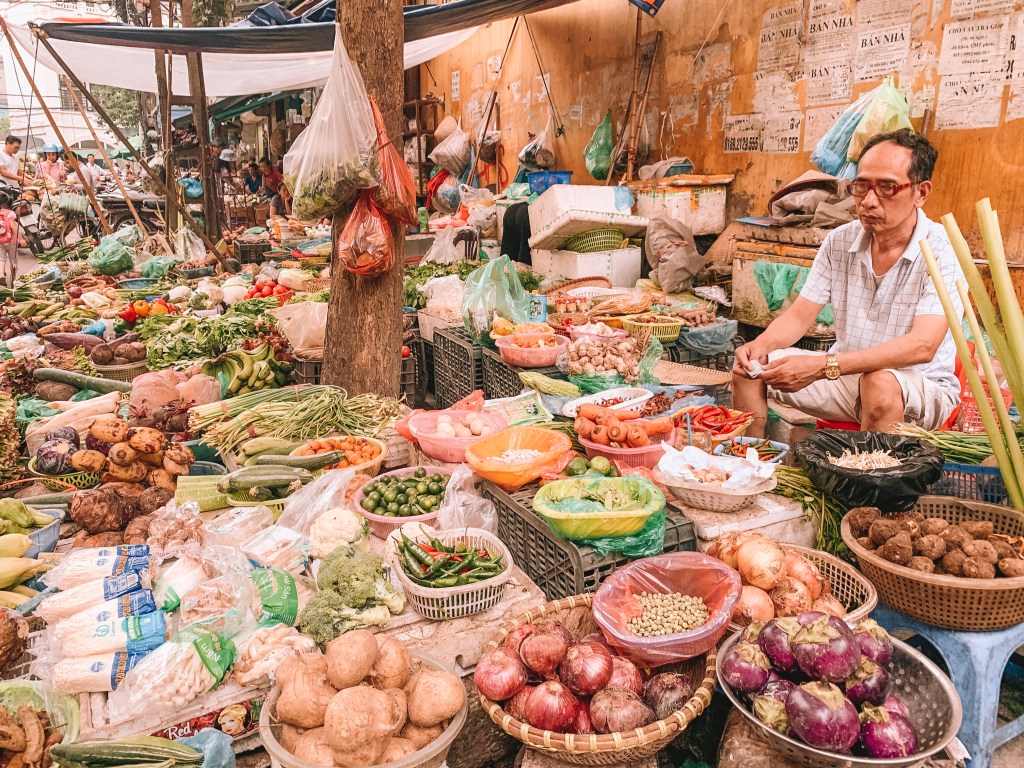
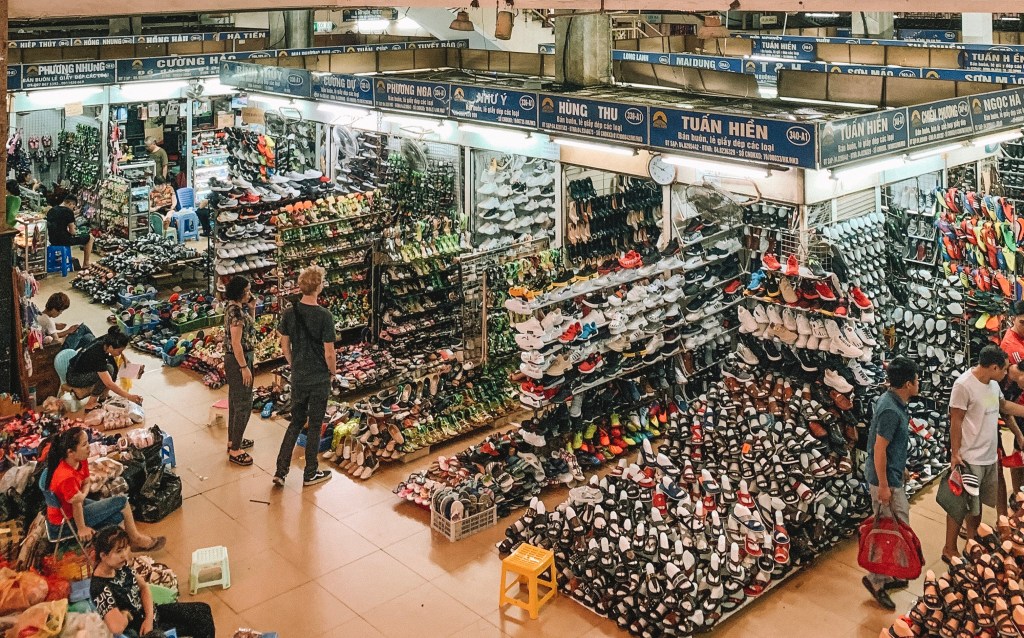
There’s many a market in Hanoi from local food markets serving fresh ingredients for the locals to the weekend night market filled with souvenirs, cheap clothes and knock off goods. Our top picks include Dong Xuan market (huge indoor market open daily) and the Weekend Night Market (as you guessed from the name, this market is only on weekend nights). However, there are loads of markets in and around Hanoi’s Old Quarter so spend time exploring the local markets and grab a bargain if you can! Often the vendors will try to overcharge you slightly as a tourist however, I felt I didn’t want to barter over £1 or £2 that a local needed more than I did. When deciding whether to barter or not, just keep in mind that it’s a local person trying to make a living.

6. Train Street

Several times a day (depending what day it is), a large bellowing train passes through the narrow streets of Hanoi’s train street. The street is lined with bars and cafes where you can pitch up for an iced coffee or beer while you wait for the train. You’ll also see people’s homes with locals getting on with daily life, washing their clothes and cooking food. There’s plenty of opportunity for you to get the classic train track photo however, shortly before the train is expected, the street is cleared and you’ll need to press yourself against the walls behind the painted lines as the huge train really does fill the narrow street. You’ll hear the loud horn blowing through the streets and the train will whizz past. We visited on a Sunday late afternoon/evening when 2 trains passed through the street within 30-40 minutes of each other. Some of the cafes and bars have timetables on show so you know when to expect the train. It’s become increasingly popular with tourists so you’re best to get there at least 20-30 minutes before a train is expected to grab a good spot!

6. Traditional Vietnamese Cooking Class

A truly memorable experience for us was the cooking class we took at Apron Up Restaurant where we cooked 4 traditional dishes. Our class included a trip to the local market to buy fresh ingredients. This allows you to see local life and how the locals buy their food – which is typically in small portions, bough fresh that day to make just enough for one meal. You’ll learn about the traditional vegetables, spices and meats that they use in their cooking and how they use every part of the vegetable and animal to reduce waste and cost. Once we had all of our ingredients from the market, we returned to the kitchen to prepare our dishes for the evening – spring rolls, pho, bbq meatballs and papaya salad. Whilst Vietnamese cuisine rarely includes dairy, it often revolves around meat. Apron Up catered to all dietary requirements adapting dishes to be suitable for vegetarians and vegans with tofu substitutes. A truly excellent class that highlighted local life, traditional cooking methods and also carefully adapted to make Vietnamese cuisine for all dietary requirements.

7. Visiting the different streets

You’ll find streets dedicated to selling everything from electric light, neon signs, shoes and kitchenware to souvenirs and fashion items for tourists. There’s even a ‘fake street’ dedicated to selling paper money, mobile phones, clothing and jewellery amongst many other paper gifts, all for the purpose of burning as part of the Vietnamese tradition of burning items for their ancestors in the afterlife. It’s mesmerising wandering the streets of Hanoi discovering different streets dedicated to specific items and trades. There’s about 70 streets that are commonly referred to as the ’36 Streets’ so try spot as many as you can.

8. Sample the local street food

One unmissable thing that couldn’t be left off the list of things to do in Hanoi is sample the local street food. You’ll find vendors selling pho, steamed buns, grilled meats as well as fresh fruit carved beautifully. Street food is incredibly cheap costing well under £1 for a meal or serving and is incredibly delicious too. You’ll find vendors on every street so they’re not hard to find. Try something new and if you don’t like it, it’s cheap enough to try something else!
Angkor Wat: Getting Around

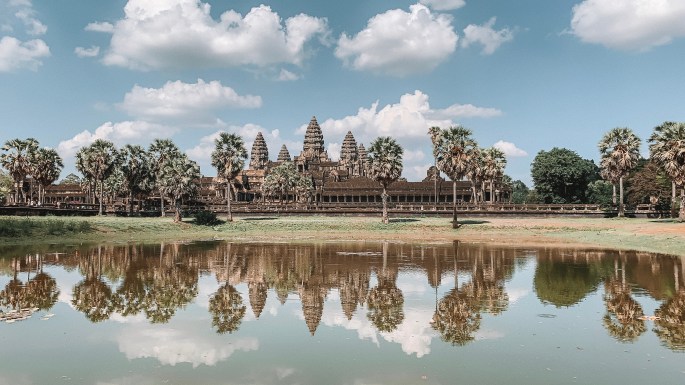
Angkor Wat is somewhere I’ve been desperate to visit for the longest time and was the inspiration for our South East Asia trip. It’s situated just outside the city of Siem Reap in the north of Cambodia, where we stayed for 3 days. Angkor Wat is one of the largest religious monuments in the world, spread out across over 200 hectares and built 900 years ago. The size of the Angkor UNESCO World Heritage size will completely blow your mind, filled with temples hundreds of years old.

For our visit, we stayed in the city of Siem Reap at the Apsara Residence Hotel, just 5 minutes walk from busy Pub Street but approximately 7km from Angkor Wat. While there are options to stay closer to Angkor Wat and the complex of temples, you will still need to do some travel whether that’s by car, tuktuk, bike or walking (although I wouldn’t recommend walking in the Cambodian heat!).

First thing to know about is the Angkor Pass that you need for visiting the temple complex. You can only buy the pass from the official ticket centre so please do not believe any hotel workers, tuktuk drivers or locals who claim they can sell you tickets for a discounted price. There are 3 different passes you can get depending on how much temple time you want:

  • 1-day pass costing $37 and valid for one day (valid only on the day of purchase up until 5pm, after 5pm it is valid for the next day – I’ll come back to this)
  • 3-day pass costing $62 and valid for 10 days from purchase
  • 7-day pass costing $72 and valid for 1 month from purchase

The ticket centre is about 4km from Siem Reap but all car and tuktuk drivers will know where this is to take you there before you head into the park. It’s open from 4.30am so you can get their early to purchase your one day ticket in time for sunrise at one of the temples. It’s worth noting that if you go purchase your ticket up until 4.30/5pm, the day of purchase counts so don’t rock up at 3pm to purchase your 1-day ticket! However, the good news is that if you purchase your ticket after 5pm, that day will not count so you can head into the park and see the sunset for free and maximise your time in the complex.

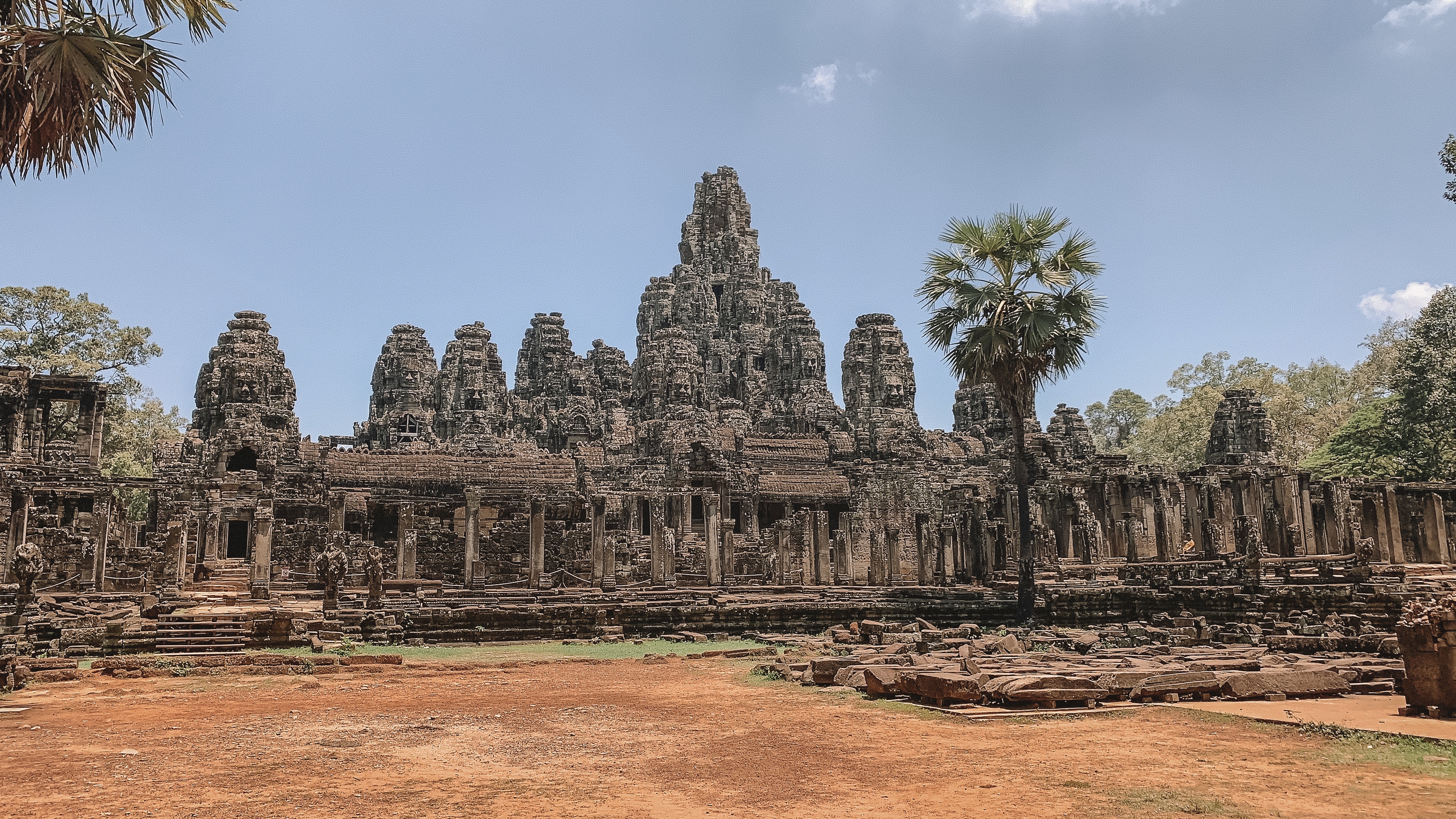
Once you have your ticket, you’re good to go. There are heaps of temples in the complex with Angkor Wat understandably being the most popular but there are many others that are highly visited by tourists including Bayon and Ta Prohm. There are two main tour routes that are offered to tourists (but of course, you can plan your own if you want), one being the grand tour and the other being the small or ‘mini’ tour – we managed to do both. The tour name is not really relevant to how long it takes, I believe the names are related to the circle in which the tour goes so the smaller circuit (with more temples) is the mini tour and the grand tour goes around a bigger circle with fewer stops. The length of the tour will ultimately depend on how long you spend in each temple.

The mini tour for us started with sunrise at Angkor Wat, an incredible way to start the day despite the 4am wake up call. The next day, we took the grand tour which took us to 6 more temples and was slightly shorter than the mini tour. We hired a tuktuk driver for the day for each tour through the hotel. This cost $18 for the day but an additional $5 was charged for sunrise, which I believe is the average rate to hire a tuktuk for the day. For us, organising a tuktuk driver was the easiest option as the hotel organised it. However, there is no shortage of tuktuk drivers in the area that you can ask to hire for the day. As I mentioned earlier, there are other options for getting around the park including, the most pricey option, a car or hiring your own bicycles or motorbikes. There is of course the option of walking (or running!) and we did see a few people braving the blistering 36 degree heat but the park is quite large and would take some time to get around by foot!

Our recommendation would be to hire a tuktuk for the day, not only is this affordable but the driver will know where they’re going and take you directly to each temple. It’s a good idea to agree a meeting place with your driver before you leave them to enter the temple as it can be difficult to find them in the sea of tuktuks outside each temple. You can also hire a guide for the day costing around $40 for the day if you are interested in learning more about the temples.

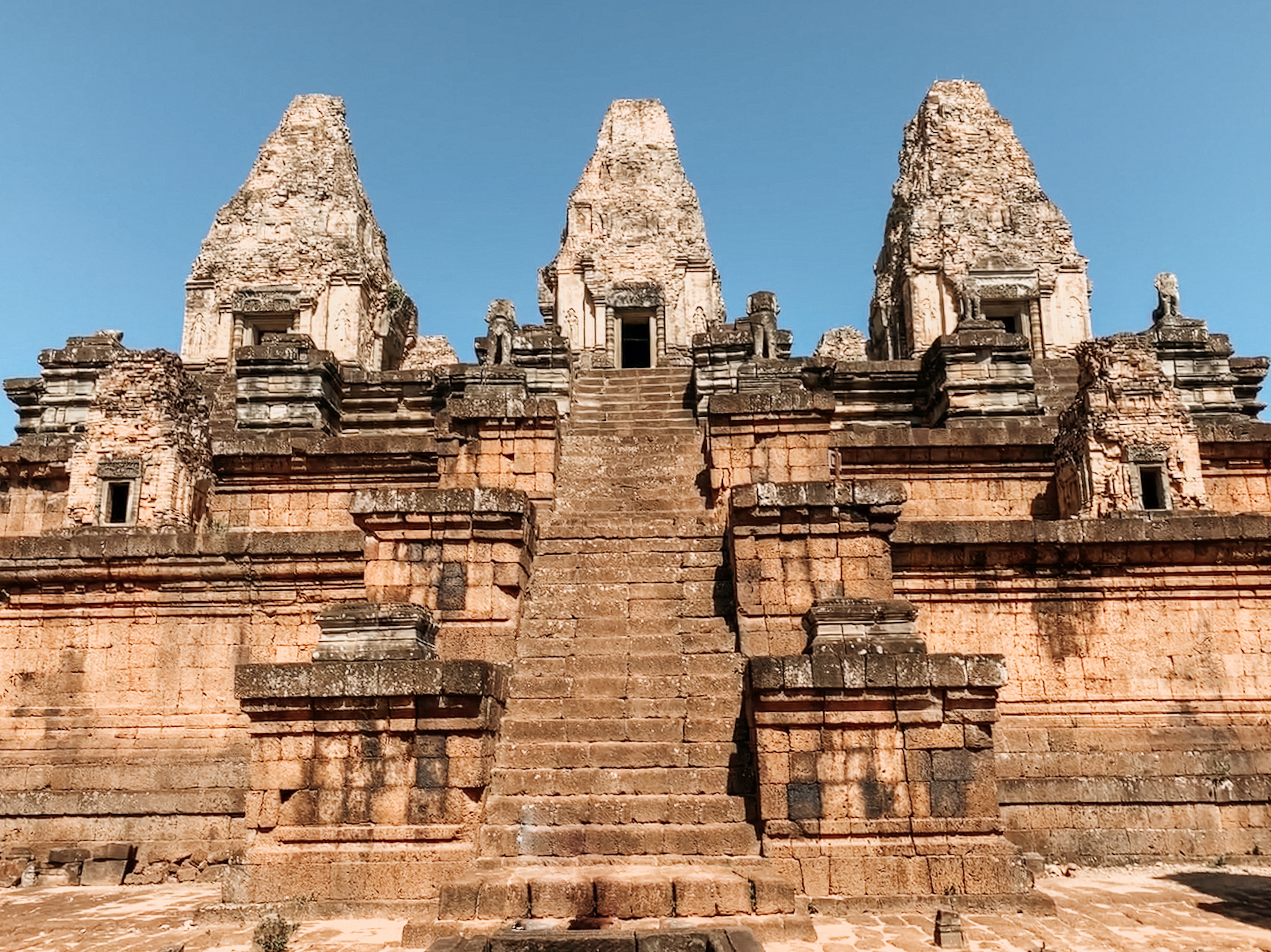
We visited almost 20 different temples over 3 days and I’ll admit they did end up looking very similar by the end of our time in Angkor World. Aside from the popular tourist hotspots of Angkor Wat, Ta Prohm and Bayon, the defining features of Ta Som and Pre Rup stood out. Likely if you visit the Angkor World complex, you’ll end up visiting a similar amount of temples, it’s definitely wise to take note of the name of each temple and one defining feature that stood out for you so you can remember it well. There are many more temples that simply cannot fit in to the grand and mini tour so keep your eyes peeled on your way for secret ones that are just as beautiful but rarely have any visitors.

Mount Fuji: Views from the Shinkansen

Fujisan (or Mount Fuji) is undoubtedly one of Japan’s most iconic attractions and the reason many visit the country. It’s a truly wondrous sight and an absolute must see when in Asia. There are a number of ways to see Mount Fuji, most popularly from one of the lakes surrounding the mountain, from the 5th base station or while speeding past on the Shinkansen.

While we highly recommend at least a day trip to view Mount Fuji (separate blog post on our trip to Kawaguchiko to follow), it’s not always suitable for everyone’s schedule. So often, viewing Fuji from the Shinkansen while travelling to/from Tokyo is sometimes the only option. Not only is the journey punctual, smooth and comfortable, you’ll also get some incredible views.

While you can use the Bullet Train to visit Fuji, we viewed Fuji on the journey from Tokyo to Kyoto. So, here’s our top tips for catching a glimpse at Japan’s tallest mountain from the comfort of the bullet train:

  1. Sit on the correct side. If travelling from Tokyo to Kyoto, sit on the right or if travelling toward Tokyo, sit on the left. When you make your reservation, ask to sit on the left or right hand side depending on your direction or simply ask for the mountain view. It’s always best to make a reservation to guarantee a seat.
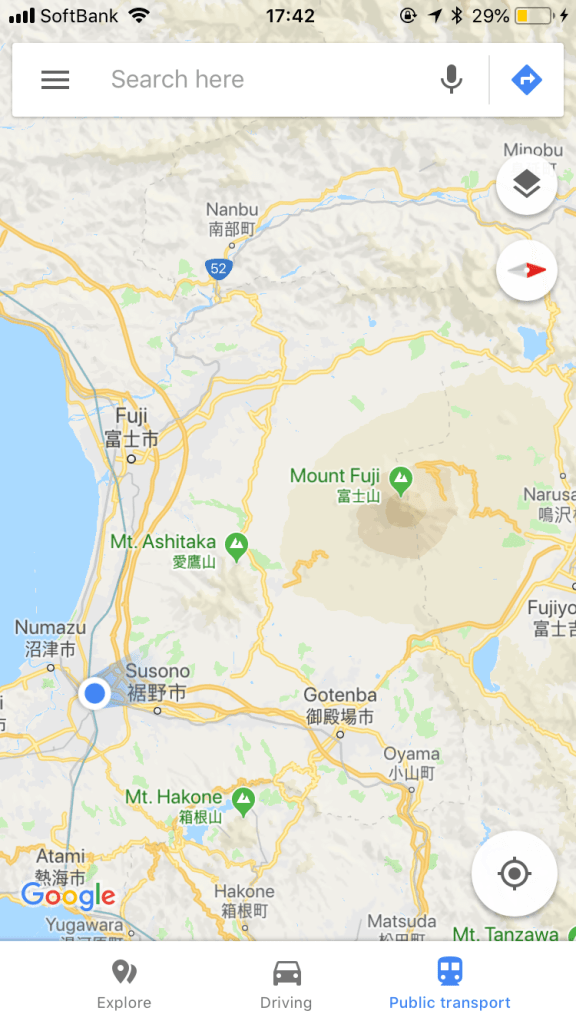
  2. Fuji comes into view approximately 40-42 minutes into the journey (on the Nozomi Bullet Train) however, times will differ depending on what Bullet Train you travel on. You can see Mount Fuji for approximately 5-10 minutes from the Shinkansen. If you’re super keen like me, you can follow your location on Google Maps as you travel and see Fuji first come into view as you pass Susono on the map and approximately 42 minutes into the journey (see screenshots below).
  3. Time it right. Fuji can often be masked by clouds so if you’re set on seeing it, then time your trip right. Visibility of Fuji is better in the winter months, typically from October through to February, while visibility drastically drops throughout the summer months. Even if you luck out in Summer with great visibility, the iconic snow cap melts. For the best visibility, your best bet is early morning.
  4. Enjoy the view with your eyes. While it’s so tempting to take lots of photos or videos, you’ll only see the mountain for a few minutes so it’s best to just enjoy with your eyes. Any photos or videos you take will have a lot of buildings and electric lines in the foreground anyway.

The Journey Begins

Tom and I met back in late 2015 as graduates in the same company. It wasn’t long before we hit it off based on our shared love of crappy Netflix shows and junk food. Soon enough that shared love expanded to travel too. We went on our first holiday in May 2016 as a short, city break for my birthday and while on that holiday, we planned the next one for Tom’s birthday in July.

Since then our holidays have only got bigger and better. We’ve kept our 9 to 5 jobs and maximised our annual leave each year with holidays around the world. As I’m writing this, we’ve visited over 20 countries in Europe, North America and Asia in the last 3 years. Each one of them a highlight in their own right. We often ask each other what has been our favourite place or our favourite holiday but we can never pick just one!

There are just so many places in the world to visit and it’s often difficult to pick your next trip. I started this travel blog as a way to share our travels, photos and insights that will hopefully help inspire others to pack their bags and visit somewhere new.

You can find us on Instagram @byseasandsky for more inspiration!